 FAST DELIVERY, ON THE DATE YOU CHOOSE.



From snowdrops to peonies, spring flowers month by month, in a bouquet and on the balcony
Spring flowers: which ones and when?
In short
Spring blooms in waves. Crocuses, snowdrops and primroses open the season in February. Daffodils, hyacinths and tulips take over in March and April. Lilac, lily of the valley, iris and peonies close the season in May.
In bouquets, the most common spring flowers are tulips, ranunculus, anemones, narcissus and, in May, peonies. Here is the calendar, and how to enjoy them at home.

February and March: the first flowers
These are the flowers that push through the cold, sometimes under the last of the snow.
- Snowdrop: the very first, white and nodding, from February.
- Crocus: purple, yellow or white, February to March, in full sun or partial shade.
- Hellebore: also called Christmas rose, it blooms from winter into early spring, from white to deep purple.
- Primrose: bright colors, February to April, in cool shade.
- Mimosa: as a cut flower, it comes from the Mediterranean between January and March.
April: the heart of spring
- Daffodils and narcissus: the yellow of renewal, March to April, with a light scent.
- Hyacinths and grape hyacinths: clusters of tiny bells in blue, pink or white. Hyacinths are very fragrant.
- Tulips: April to May in the garden, in every color and shape.
- Anemones: March to June depending on the variety, with a dark center and bold petals.
- Flowering trees: yellow forsythia, magnolia, then cherry trees.
Our seasonal bouquets
View all bouquets
Sienna BouquetSienna Bouquet
From 74.90 CHF

Selma BouquetSelma Bouquet
From 74.90 CHF

Sarah BouquetSarah Bouquet
From 74.90 CHF

Saphira BouquetSaphira Bouquet
From 74.90 CHF

Shiloh BouquetShiloh Bouquet
From 74.90 CHF

Esmée BouquetEsmée Bouquet
From 74.90 CHF
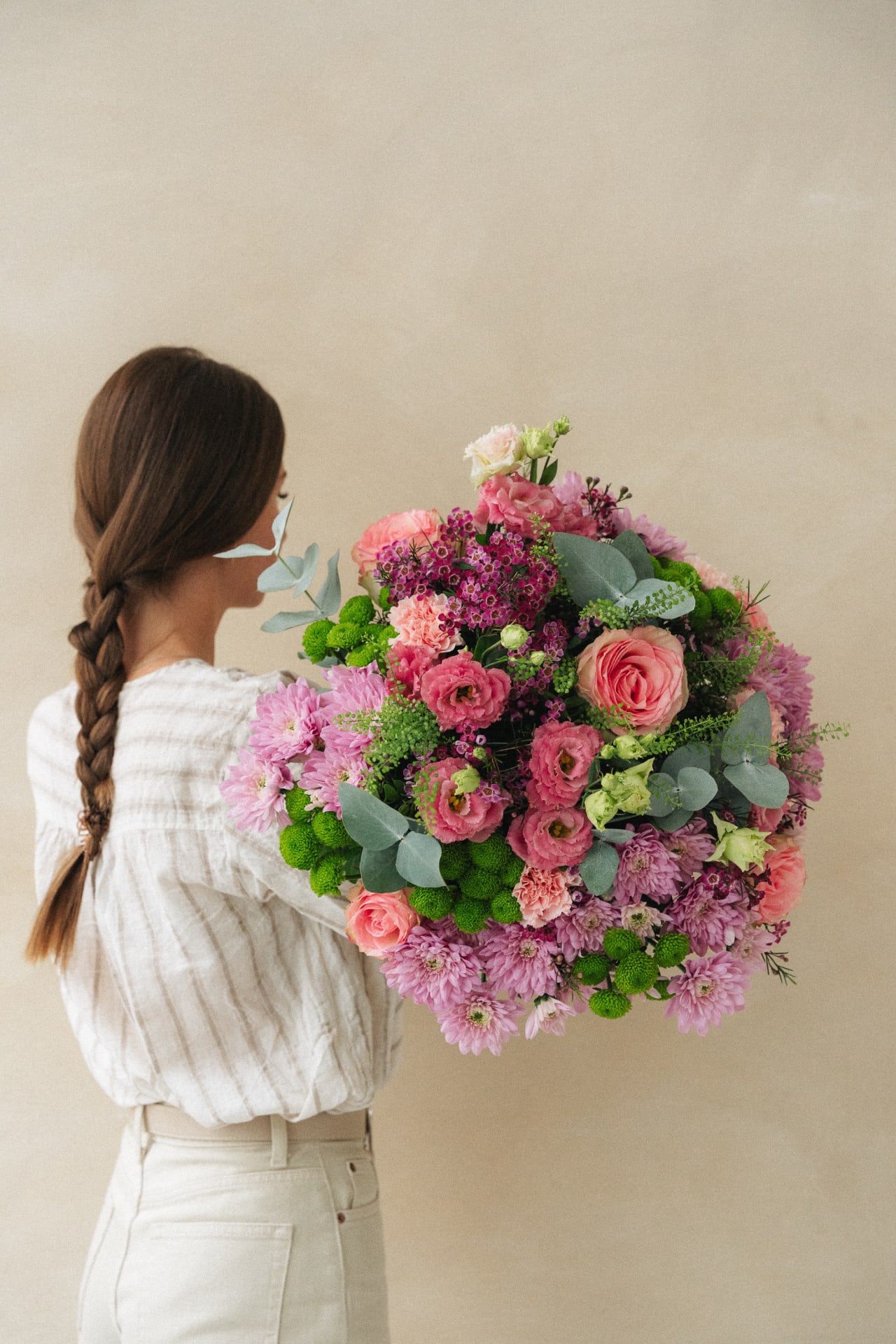
Stella BouquetStella Bouquet
From 74.90 CHF
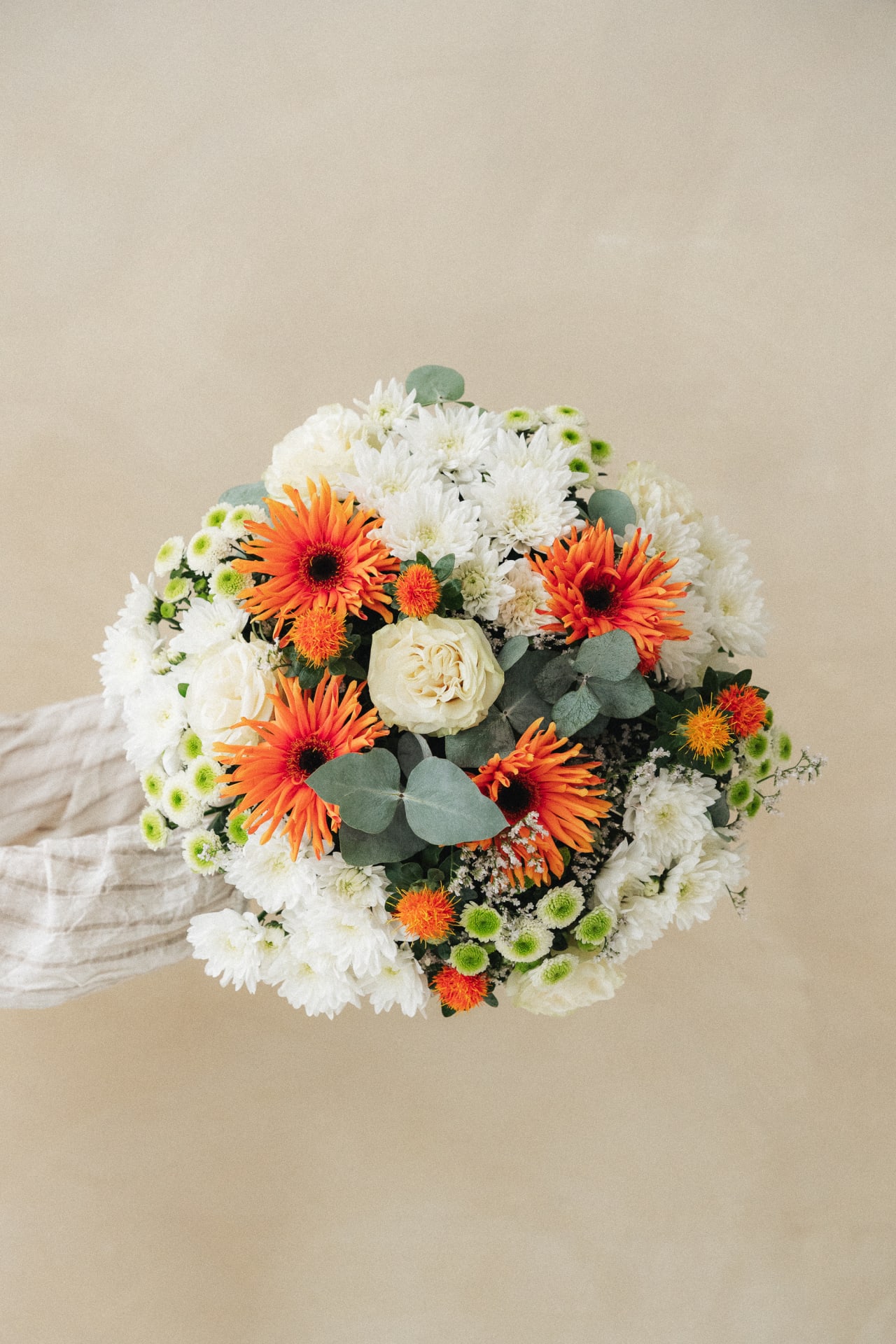
Sixtine BouquetSixtine Bouquet
From 74.90 CHF
May: late spring
- Lilac: fragrant clusters in mauve or white.
- Lily of the valley: at the very start of the month, small and highly fragrant.
- Iris: May to June, from deep blue to purple.
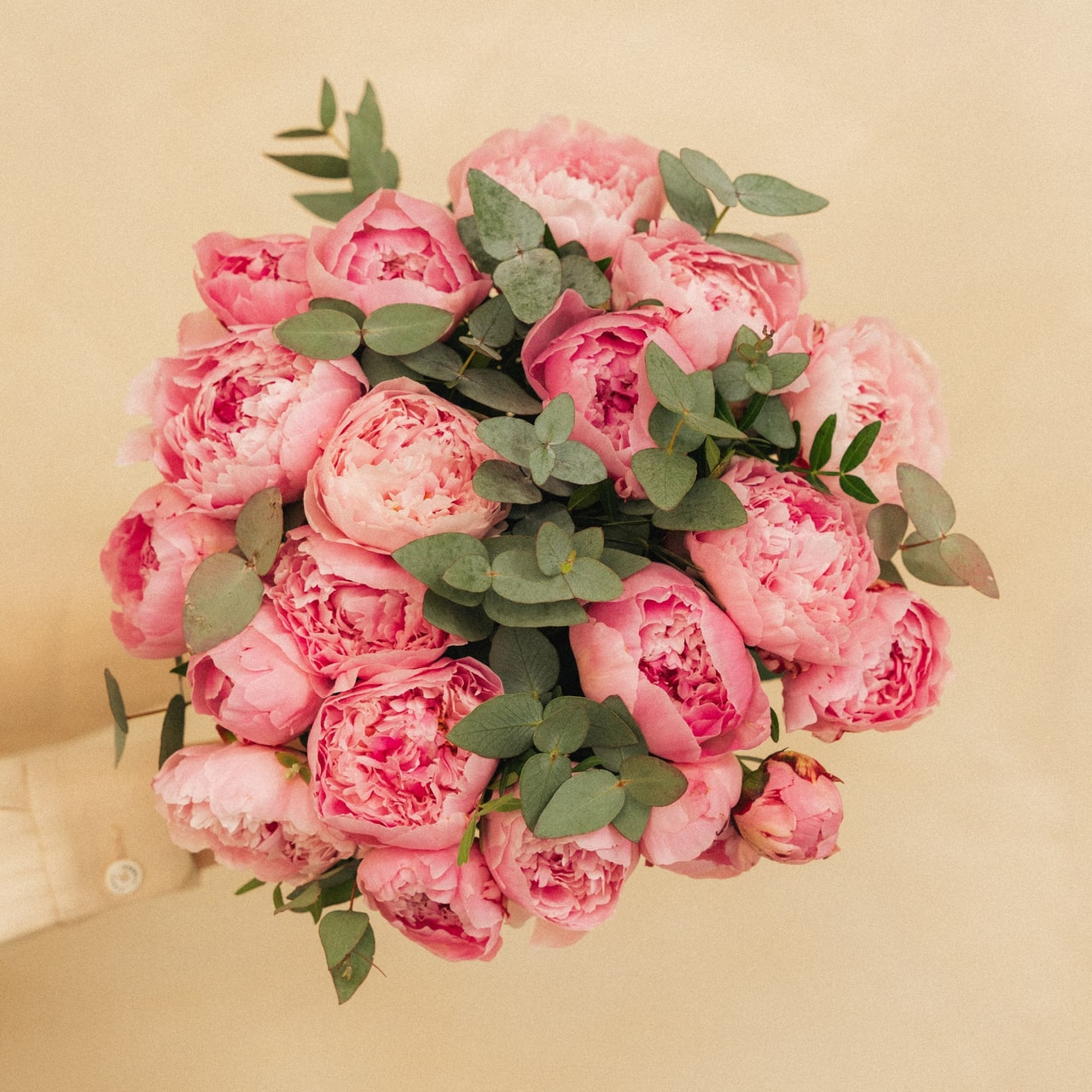
- Peony: it arrives in May, round and lush. It is the great flower of late spring.
- Columbine and forget-me-not: for the cooler corners of the garden.
May is also the month of Mother's Day, on the second Sunday in Switzerland. To choose that bouquet, read which bouquet to give for Mother's Day.
Spring flowers in a bouquet
Not every garden flower works in a vase. The ones you find most often in spring bouquets are tulips, ranunculus, anemones, narcissus and mimosa, then lilac and peonies.
A few simple steps help them last.
- Tulips: they keep growing in the vase and turn toward the light. Use little water and give the stems a clean cut every two days.
- Narcissus: their sap harms other flowers. Leave them alone in water for a few hours before mixing them.
- Lilac: cut the stems at an angle and remove most of the leaves, which drink the water meant for the flowers.
- Peonies: bought in bud, they open within two or three days.
Our seasonal bouquets follow these deliveries; the exact varieties depend on what arrives at our workshop in Vernier each week.
Planning a spring balcony
Spring bulbs are planted in fall, from September to November: crocuses, tulips, daffodils, hyacinths and grape hyacinths. In a window box, layer them, the largest at the bottom, for blooms from March through May.
In early spring, fill in with plants already in flower that can handle the last cold snaps: pansies, primroses, forget-me-nots or hellebores. For scent, a few potted hyacinths by the balcony door are enough.
Think about sunlight: tulips and crocuses love sun, while primroses and forget-me-nots prefer partial shade.
Giving flowers in spring
Spring has several occasions for giving flowers.
- International Women's Day, March 8: see which flowers to give on March 8.
- Easter: a yellow and white bouquet with narcissus or tulips for the holiday table.
- Mother's Day, in May: read flowers for Mother's Day.
- A spring birthday: a bouquet of tulips or ranunculus. See our birthday flowers.
We deliver anywhere in Switzerland Tuesday to Saturday for orders placed before 4 p.m. the day before, and the same day in the canton of Geneva for orders placed before 2 p.m., Monday to Saturday.
You may also like



Join us on Instagram


CHOOSE YOUR BOUQUET
Seasonal flowers, roses or timeless bouquets.

ARRANGED BY HAND
Each bouquet is prepared by our florists.

PROTECTED IN TRANSIT
A cardboard box and a water reservoir around the stems.

DELIVERED ON YOUR CHOSEN DATE
Check the dates available for your address.