 FAST DELIVERY, ON THE DATE YOU CHOOSE.



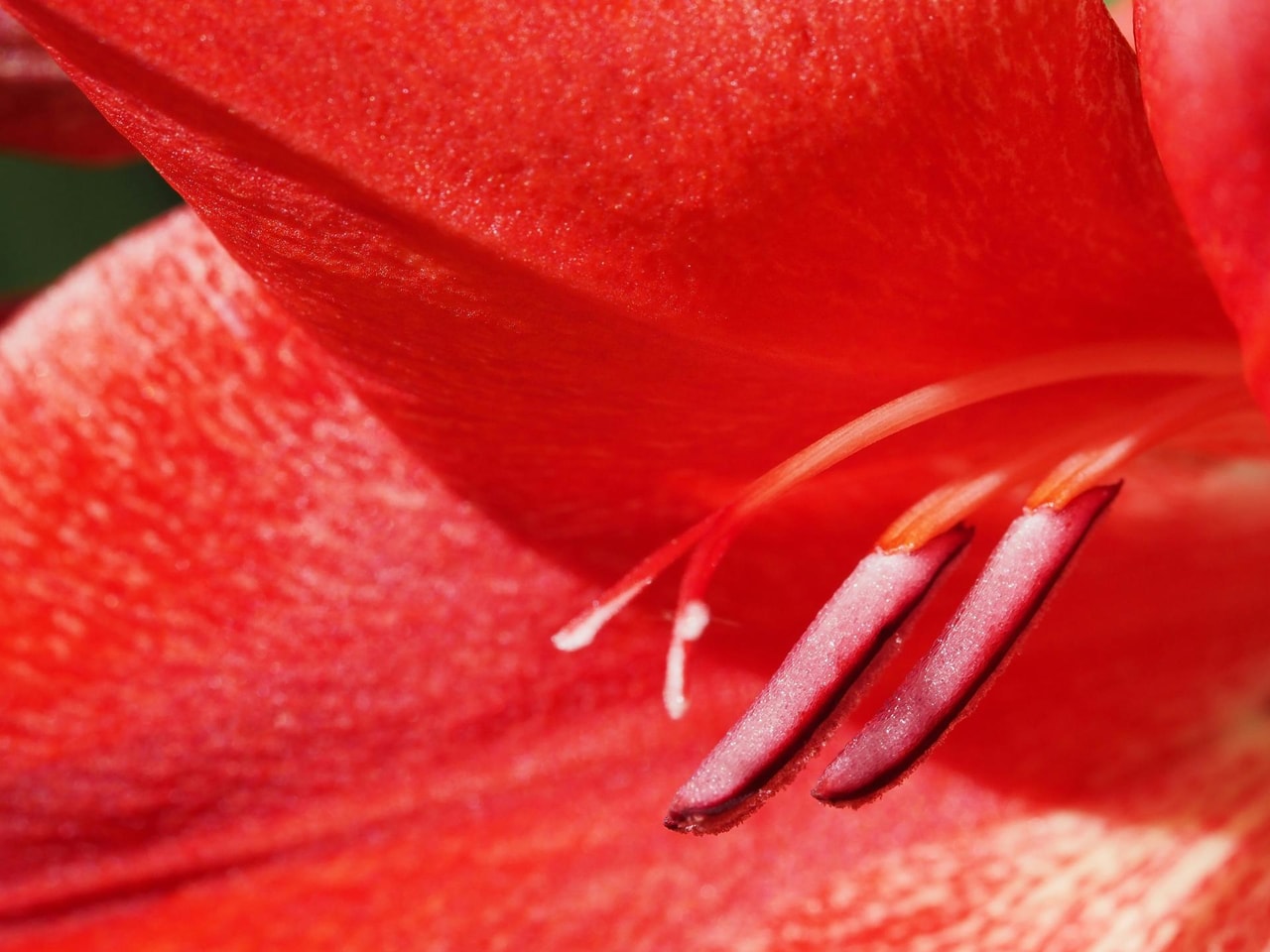
What actually blooms, what you can still plant, and the real story behind the August birth flower.
August flowers: the garden at its peak
In August the garden stops promising. It delivers. Beds planted in April reach full maturity, summer bulbs stand at their full height. Annuals sown in spring begin a flowering season that will run until the first frosts.
Three things come together. The soil has been storing heat since June and no longer cools down overnight, which speeds up the rise of flower stems. Sunshine hours stay high, averaging roughly 200 to 230 across the month on the Plateau and noticeably more in Valais and Ticino. And most summer perennials have finished their vegetative growth and are pushing every bit of energy into flowering.
No other month offers such simultaneous variety. Here is what actually blooms, what can still go in the ground. And why the August birth flower does not have the origin most guides claim.
The ten flowers that define August
- Dahlia: full sun, 40 cm to 1.5 m, flowering July to October
- Gladiolus: full sun, 60 cm to 1.2 m, flowering July to September
- Cosmos: full sun, 60 cm to 1.2 m, flowering June to October
- Rudbeckia: sun or partial shade, 50 cm to 1 m, flowering July to October
- Canna: full sun, 80 cm to 2 m, flowering July to October
- Celosia: full sun, 20 to 70 cm, flowering July to September
- Lisianthus: sun or partial shade, 30 to 90 cm, flowering July to September
- Lily: sun, roots in shade, 60 cm to 1.5 m, flowering June to August
- Zinnia: full sun, 30 cm to 1 m, flowering June to October
- Lavender: full sun, 30 to 80 cm, flowering June to August
The dahlia, undisputed star of late summer
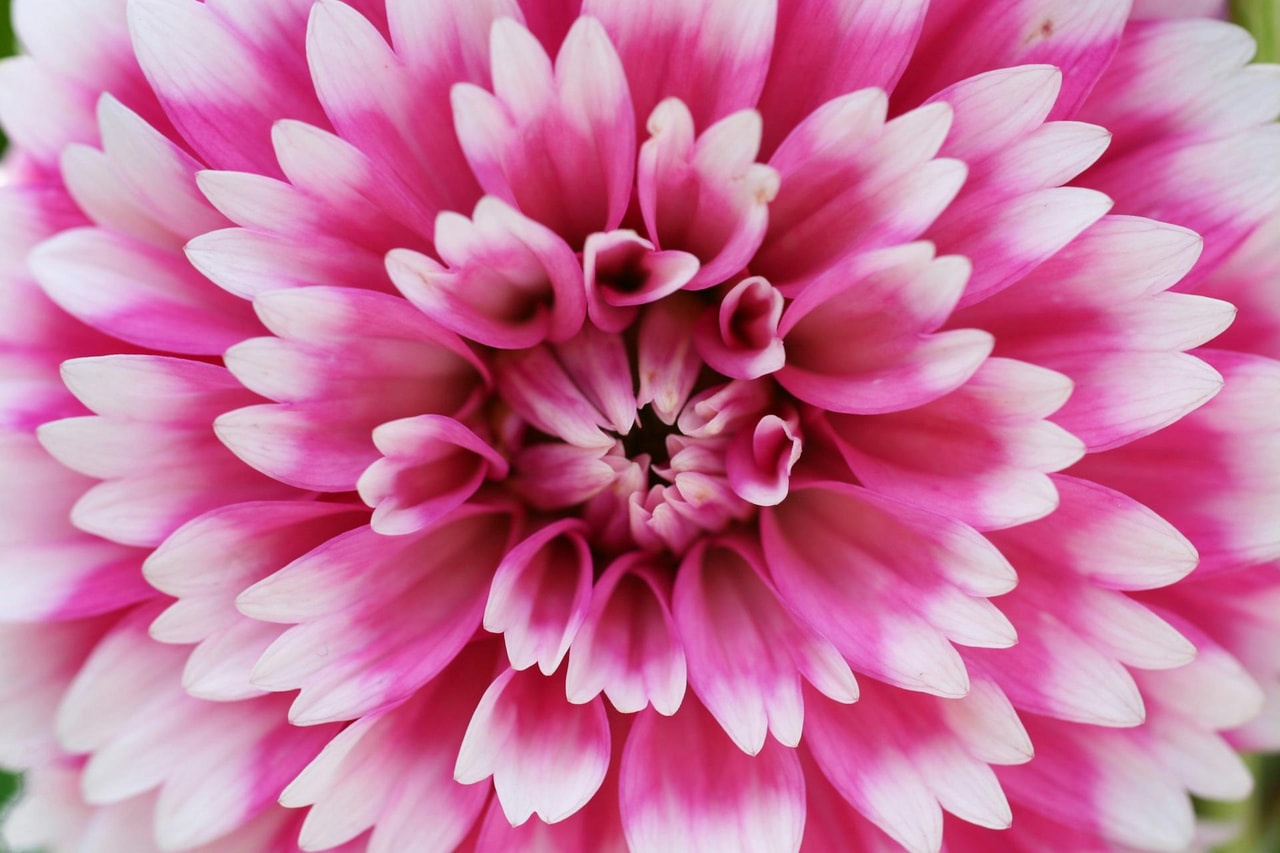
Three broad groups share the genus and they produce entirely different effects. Pompon dahlias form perfect spheres of five to eight centimetres, strikingly graphic when planted close together. Decorative types carry large double blooms with rounded petals, the most spectacular in a vase. Cactus dahlias, finally, have rolled petals tapering to a point, which gives them a spiky, almost exotic look.
A single bed can hold all three without jarring, provided the heights are right. Dwarf varieties at the front, tall ones at the back, with a stake put in at planting rather than in a panic after the first storm.
The dahlia wants water, a great deal of it. That is its only real demand. Two or three heavy soakings a week at the base beat a daily trickle over the surface.
The gladiolus, vertical line in the August border
Its upright spike solves a problem many summer gardens share, namely the lack of relief. When everything spreads sideways at knee height, a run of gladioli restores the structure.
The colour range is among the widest in the plant world, from pure white to near-black purple, with bicolours and contrasting throats in between. The florets open from the bottom upwards, which stretches the display over a good two weeks.
One tip changes everything. Plant the corms in waves, a fortnight apart between April and June, rather than all on the same weekend. That gives you gladioli from July to September instead of a two-week firework display followed by an empty gap.
Cosmos, rudbeckias and zinnias, the beginner's trio
If nothing has ever grown for you, start with these. They are annuals sown directly where they are to flower, with no pricking out and no fuss.
Cosmos thrives in poor soil and flowers better the less you feed it. Rich ground pushes it into foliage at the expense of blooms. Rudbeckia tolerates partial shade, which makes it one of the few summer suns that work under a tree. The zinnia shrugs off a heatwave without blinking. It also delivers a colour saturation that is hard to match.
All three share a quality no catalogue makes enough of. They are covered in insects from dawn to dusk. A bed of cosmos and rudbeckias in August audibly hums.
Our seasonal bouquets
View all bouquets
Sienna BouquetSienna Bouquet
From 74.90 CHF

Selma BouquetSelma Bouquet
From 74.90 CHF

Sarah BouquetSarah Bouquet
From 74.90 CHF

Saphira BouquetSaphira Bouquet
From 74.90 CHF

Shiloh BouquetShiloh Bouquet
From 74.90 CHF

Esmée BouquetEsmée Bouquet
From 74.90 CHF
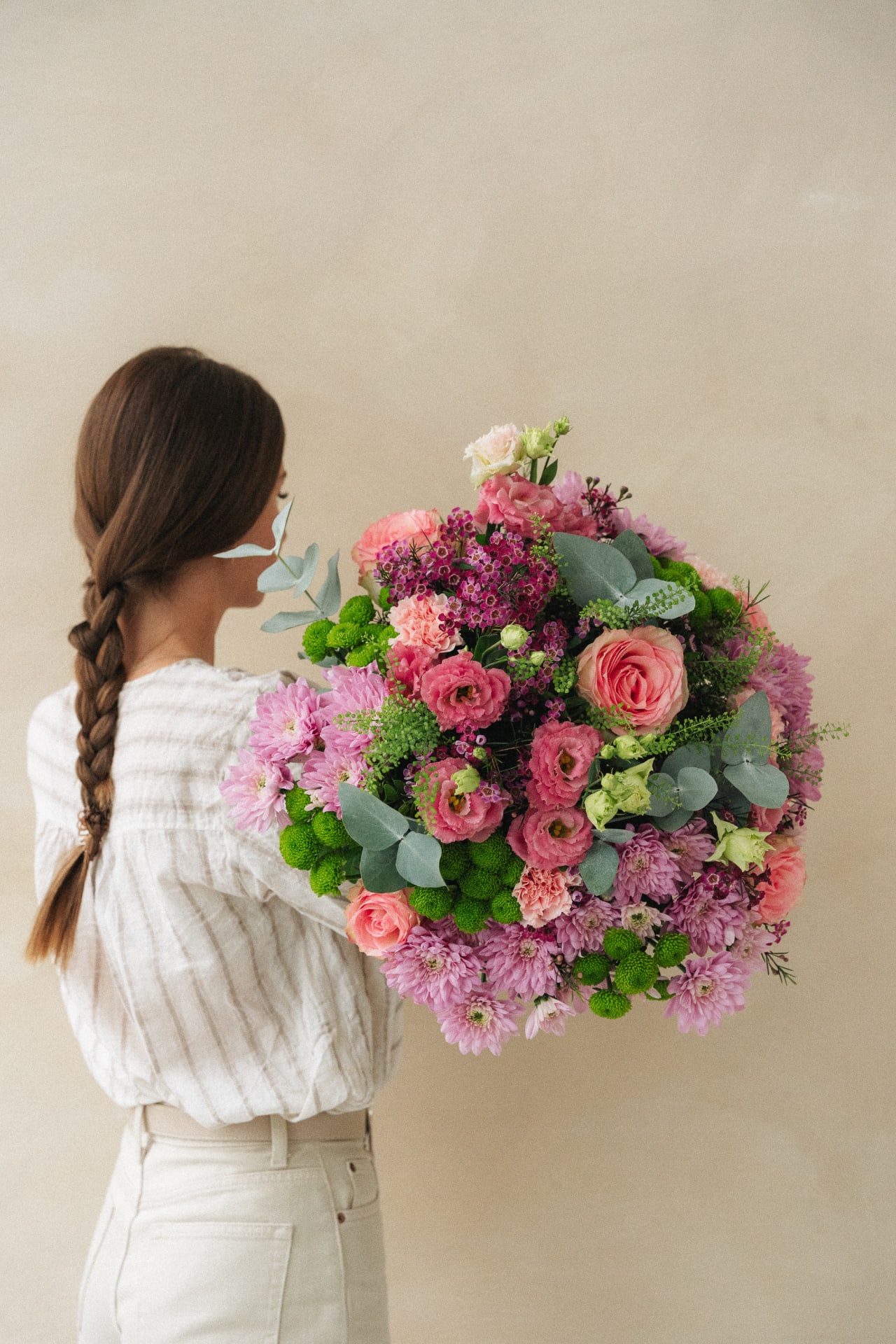
Stella BouquetStella Bouquet
From 74.90 CHF
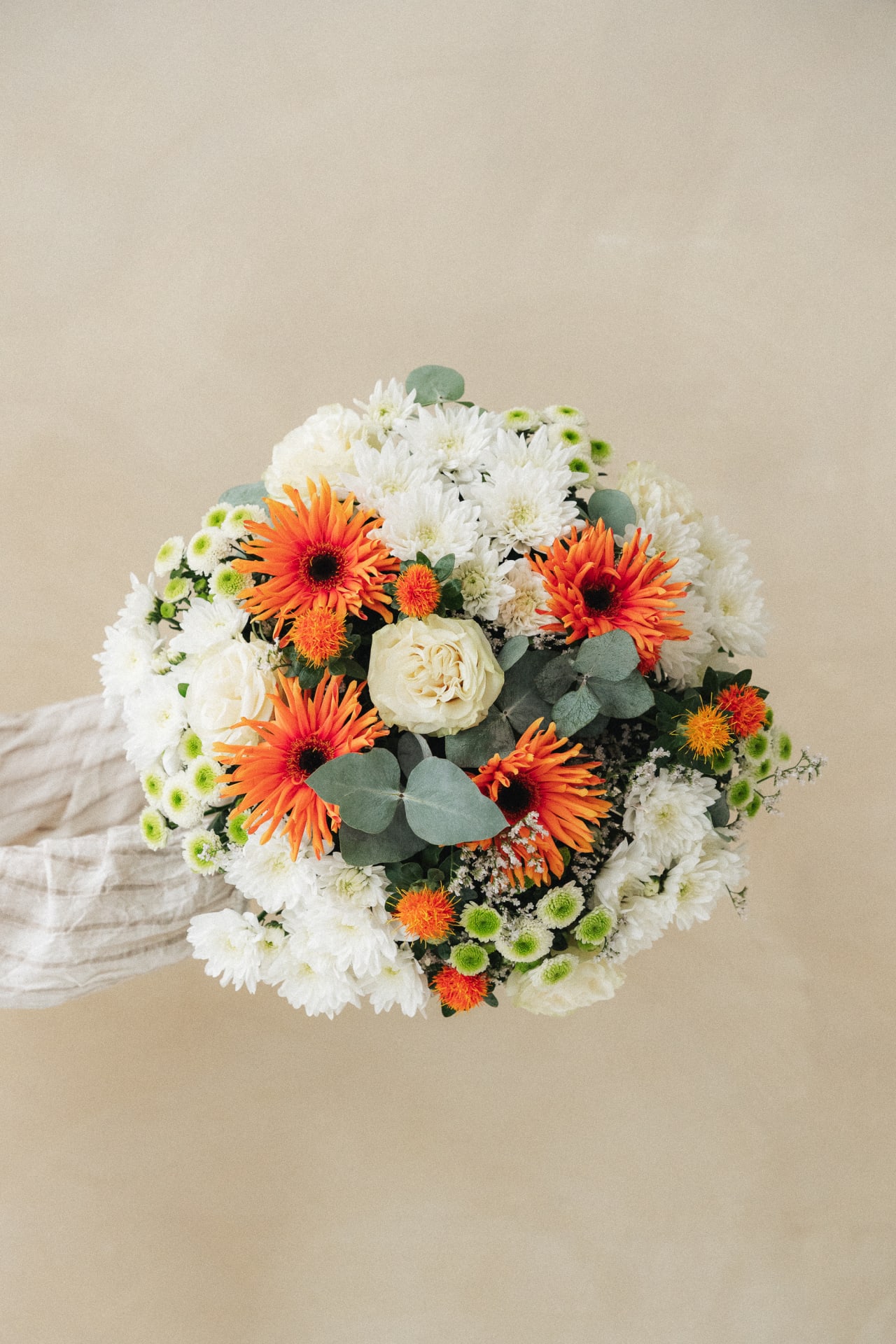
Sixtine BouquetSixtine Bouquet
From 74.90 CHF
The August birth flower and what the guides leave out
Anyone born in August has two flowers, the gladiolus as the main one and the poppy as the alternative.
The gladiolus takes its name from the Latin gladius, meaning sword, a reference to its long narrow leaves. Greeks and Romans read it as a symbol of courage. The nineteenth-century language of flowers added strength of character, integrity and sincerity of feeling. Giving a gladiolus, in the Victorian reading, meant telling someone they had pierced your heart.
The poppy, Papaver rhoeas, carries a softer and more ambivalent symbolism. Rest, consolation, remembrance. Its commemorative meaning is familiar across Britain and the Commonwealth, where it took hold after the First World War. It carries far less of that weight on the Continent, where the flower is read closer to its older sense of sleep and rest. Its ornamental relatives, the huge-flowered oriental poppy and the opium poppy grown for its seed heads, behave quite differently in the border. They share the same crumpled tissue-paper fragility of petal.
Now the point almost nobody mentions. This calendar is neither ancient nor medieval. The grid assigning one flower to each month was fixed by the Society of American Florists at its convention in Toledo, Ohio, in 1909. The purpose was commercial, to give florists a stable selling argument for themed bouquets.
It was during that very arbitration that the gladiolus won August over the poppy. Nineteenth-century British lists still wavered between the two, which is why both versions circulate today depending on the source.
The symbolic groundwork is far older. It comes from European floriography, popularised in France by Charlotte de Latour in 1819 and in England by Kate Greenaway in 1884. In other words, the meaning of the flowers is Victorian, the monthly grid is American and recent. When a website traces the tradition back to antiquity, it is inventing.
A pleasant footnote for anyone hunting a gift. The twin birthstone calendar, codified by American jewellers in 1912, gives August the peridot. Soft green against scarlet gladiolus, the pairing works remarkably well.
When exactly? The three-part calendar
August is not a uniform block. There is a world of difference between the 3rd and the 28th in the garden.
From the 1st to the 10th, lilies finish and lavender begins drying on the stem. Gladioli planted in April are at their peak. This is the densest stretch of the year in terms of species flowering at once.
From the 11th to the 20th, the baton passes. Celosias and cannas move to the front, dahlias enter their best phase. Lilies are over almost everywhere.
From the 21st to the 31st, the light changes and warm colours take over. Rudbeckias, dahlias and zinnias carry the border, joined by the first early asters. Late-planted gladioli send up their spikes.
This split applies to a garden on the Plateau, somewhere between four hundred and six hundred metres. In Valais, Ticino and the Lake Geneva basin, shift everything a week or two earlier, since August drought regularly cuts the display short. In the Jura, the Prealps and anywhere above a thousand metres, shift it later by the same margin. Above fifteen hundred metres the August calendar barely applies at all, since the season compresses into six or seven weeks.
What can you plant or sow in August?
Contrary to a widespread belief, August is not a dead month for planting. It is in fact the ideal window for three kinds of work.
Autumn bulbs first. Colchicums and autumn crocuses go in now and flower barely six weeks later, in September and October. Daffodils can go in from the end of the month for a March display. Plant at three times the depth of the bulb.
One local caution worth knowing. Colchicum autumnale, the meadow saffron that carpets hay meadows across the Plateau and the Prealps in September, is highly toxic in every part. It poses a real problem for livestock farmers and it deserves the same care in a garden with young children or a curious dog. Handle the corms with gloves and site them away from paths and play areas.
Sowing biennials next. Pansies, forget-me-nots, wallflowers and sweet Williams sown in August will flower next spring. This is the calendar the nurseries work to. It also explains why the trays are so well stocked in October.
Taking cuttings last. This is the best moment of the year for it. Lavender, pelargoniums, fuchsias, rosemary and shrubby salvias all root well as semi-ripe cuttings, meaning this year's growth already firm at the base but still soft at the tip. The strike rate is high and the whole thing costs nothing.
On a balcony or patio, go for petunias, busy Lizzies and begonias, all sold in flower at this time of year. A free-draining compost is essential, since standard potting compost on its own compacts and holds water around the roots. Expect to water daily in hot weather, twice a day for south-facing hanging baskets.
Getting through the heat without losing flowers
Three mistakes cost more flowers in August than every disease put together.
Watering in the middle of the day is the first. Evaporation cancels out most of what you apply and droplets sitting on foliage act like lenses. Water early in the morning, at the base, generously and less often rather than lightly and constantly. Bear in mind that several cantons and communes restrict garden watering during dry spells, which makes deep infrequent soaking the only workable approach in those weeks. A deep soak drives roots downwards, a shallow one keeps them near the surface where they scorch.
Skipping the mulch is the second. Five to seven centimetres of dried grass clippings, bark chippings or composted straw halve the water requirement and keep the soil several degrees cooler. It is the best return on effort in the summer garden.
Forgetting to deadhead is the third. It is also the most common. A spent flower left standing tells the plant the cycle is over, so it sets seed and stops blooming. Cut the faded heads off dahlias, cosmos, rudbeckias and zinnias twice a week and you will extend flowering by several weeks.
That leaves the unwanted guests. Aphids on young shoots, red spider mite on the undersides of leaves in dry spells. Regular misting of the foliage deals with the latter. For the former, let the ladybirds work before reaching for any bottle. In peak foraging season, every insecticide hits the pollinators too.
Cutting a bouquet from your own garden
An August bouquet takes five minutes to assemble and lasts eight to ten days. Provided you follow two or three rules florists apply without thinking.
Cut early in the morning, when the stems are full of water. Put them straight into a bucket. Then recut at an angle under water, which stops an air bubble blocking the flow of sap. Strip off any leaf that would sit below the waterline, since it rots within two days and clouds the vase.
For the arrangement, the rule of odd numbers works because the eye cannot group them into pairs and reads the whole as a volume. Three, five or seven stems of the dominant flower, never four or six.
A country-style August bouquet almost always succeeds on the same framework. Three decorative dahlias for mass, five stems of lisianthus for delicacy, a handful of cosmos for movement, a few grass heads for lightness. Vary the heights by ten centimetres between layers, since a bouquet levelled off perfectly always looks flat.
Gladioli need separate treatment. Too tall for most vases, they work best on their own, seven to nine spikes in a heavy container standing on the floor. Pinch out the terminal bud and the lower florets will open better.
A decisive month for pollinators
August concentrates a significant share of the year's foraging activity, at precisely the moment when wild flowering thins out in the wider countryside. A flowering garden then becomes a resource rather than just a decoration.
The best nectar plants of the month are lavender, by far the most visited, cosmos with its flat centre offering an ideal landing platform, rudbeckia, celosia and the sedums that start up towards the end of the month. Dahlias with open centres, the single and collarette types, are genuinely useful to insects. Double varieties are not, since breeding has turned their stamens into petals.
Two habits make the difference. Plant in drifts rather than as isolated specimens, because a bee travels shorter distances than most people assume and heads for dense blocks of colour. And drop all spraying during flowering, including products approved for organic growing, which are not neutral for being so.
Frequently asked questions
The gladiolus as the main flower and the poppy as the alternative. The gladiolus stands for strength of character and sincerity, the poppy for rest and consolation. The monthly grid was set by American florists in 1909, on much older Victorian symbolic foundations.
You may also like
Join us on Instagram


CHOOSE YOUR BOUQUET
Seasonal flowers, roses or timeless bouquets.

ARRANGED BY HAND
Each bouquet is prepared by our florists.

PROTECTED IN TRANSIT
A cardboard box and a water reservoir around the stems.

DELIVERED ON YOUR CHOSEN DATE
Check the dates available for your address.