 FAST DELIVERY, ON THE DATE YOU CHOOSE.



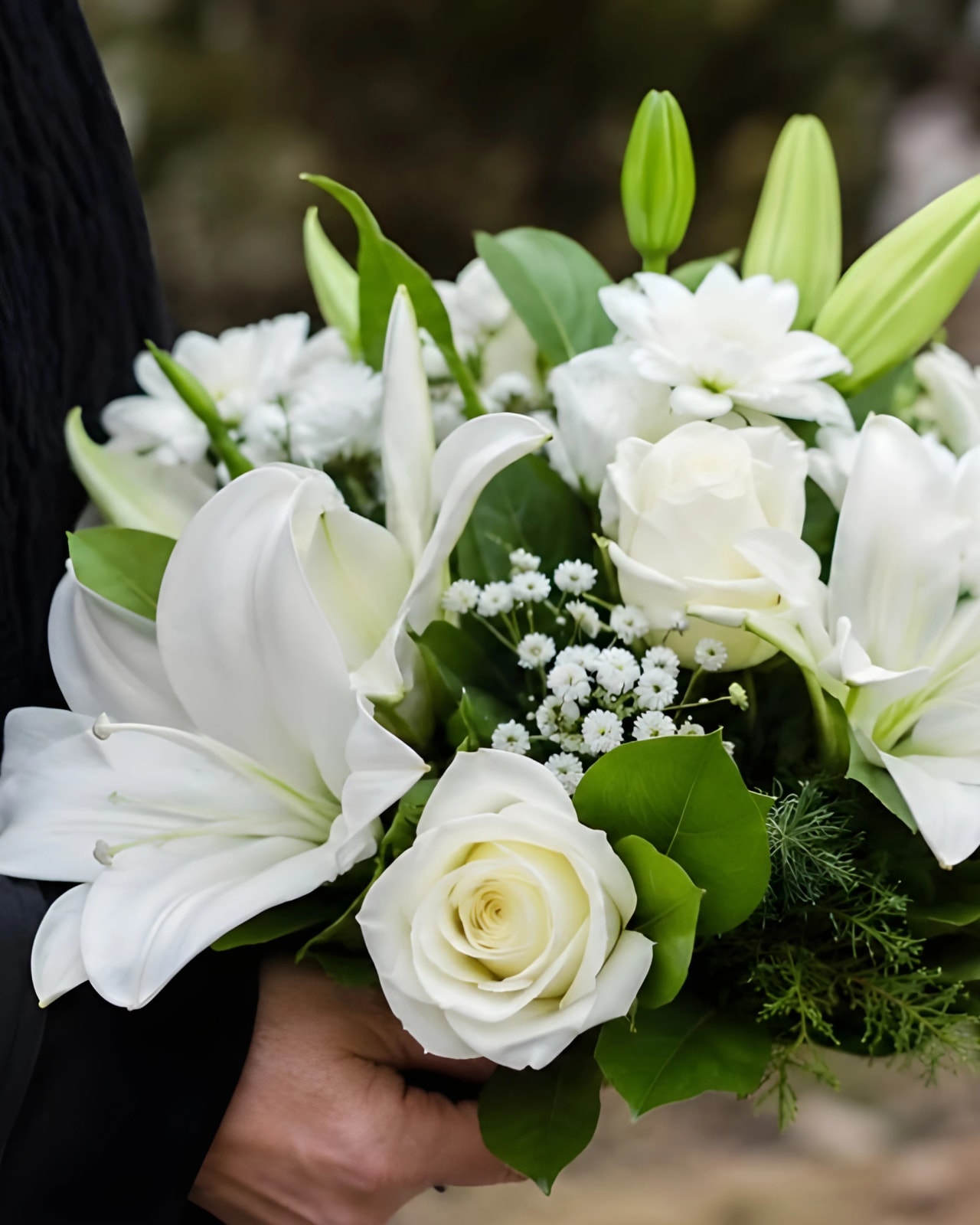
The complete guide to a fitting, thoughtful tribute
When and which flowers should you send for a bereavement?
Why give flowers for a bereavement?
When someone close dies, words often fail us. A gesture speaks in their place. Sending flowers remains one of the gentlest ways to tell a family that you are thinking of them, with nothing to explain.
Still, it helps to know the customs: when to send them, which ones to choose, who they should go to, and what to do when a family asks for no flowers and no wreaths. This guide answers all of it, with tact and care.
A flower says what the voice cannot. It brings a little beauty and softness into a moment of deep grief, and it shows the family they are not alone. The gesture is an old one: in Switzerland, as across much of Europe, flowers for the departed became a custom over centuries, until they turned into an instinctive mark of tribute. By its very nature, the cut flower quietly echoes the fragility of life.
Beyond the symbol, the role is social. Sending an arrangement is a way to show your support and to stand beside the bereaved, even when the words will not come. Flowers are a way of saying you are there, without having to speak.
When should you send funeral flowers?
People often think there is only one moment, the funeral itself. In truth, four windows suit the gesture, each with its own rules:
- As soon as the death is announced — a bouquet of support, delivered to the family home
- During the wake — a discreet arrangement at the funeral home or chapel of rest
- On the day of the funeral — a wreath or casket spray, handed to the funeral directors
- After the burial — flowers on the grave, at All Saints' or on an anniversary
Before the ceremony, supporting the family from the first news
This stage often goes unnoticed. Yet a bouquet sent to the home as soon as the death is announced touches deeply, arriving when the house empties and the shock is at its sharpest. Choose fairly hardy flowers that will last through the preparations, and add a few handwritten lines, however brief. A few sincere words are worth more than a long, ready-made formula.
On the day of the funeral, flowers at the casket or in the chapel
This is the most codified moment. The largest arrangements, casket sprays and big wreaths, traditionally fall to the close family; wider circles bring more modest pieces (bouquets, cushions or simple sprays). In practice, arrive a little before the service to hand your flowers to the funeral directors, who will set them out. If you order from a florist, ask for delivery straight to the venue, church, crematorium or funeral home, giving the name of the person who has died along with the date and time.
After the burial, do not forget the weeks that follow
Grief does not end on the day of the funeral. It is often afterwards, when visitors grow rarer, that support matters most. A bouquet delivered to the home two to four weeks later is often deeply moving. On the grave, a tribute at All Saints' or on the anniversary keeps the memory alive. A potted plant, longer-lasting than a bouquet, makes a lovely alternative that stays.
Which flowers to choose, and for whom?
Everyone has a place in this tribute, and knowing the roles avoids awkward missteps:
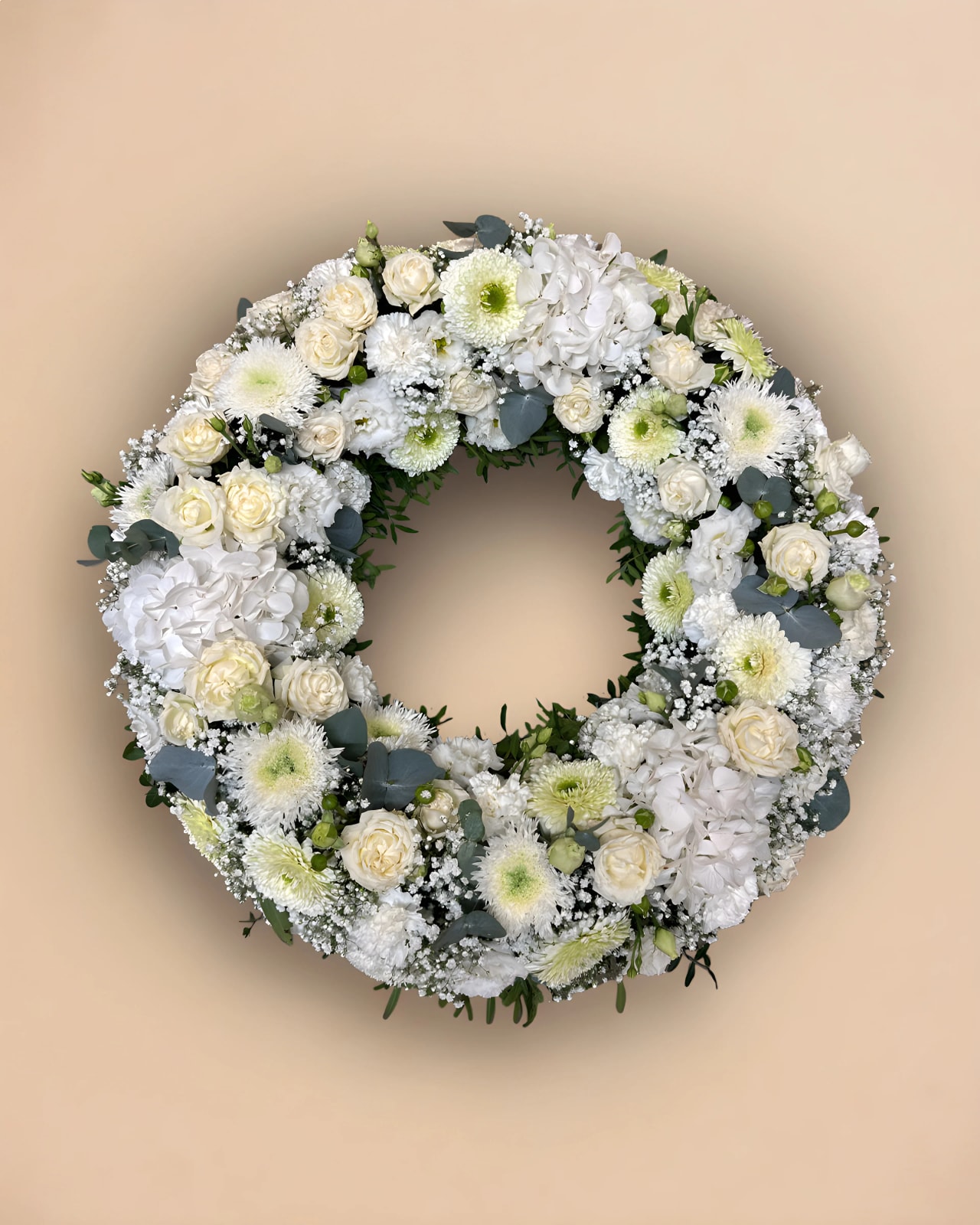
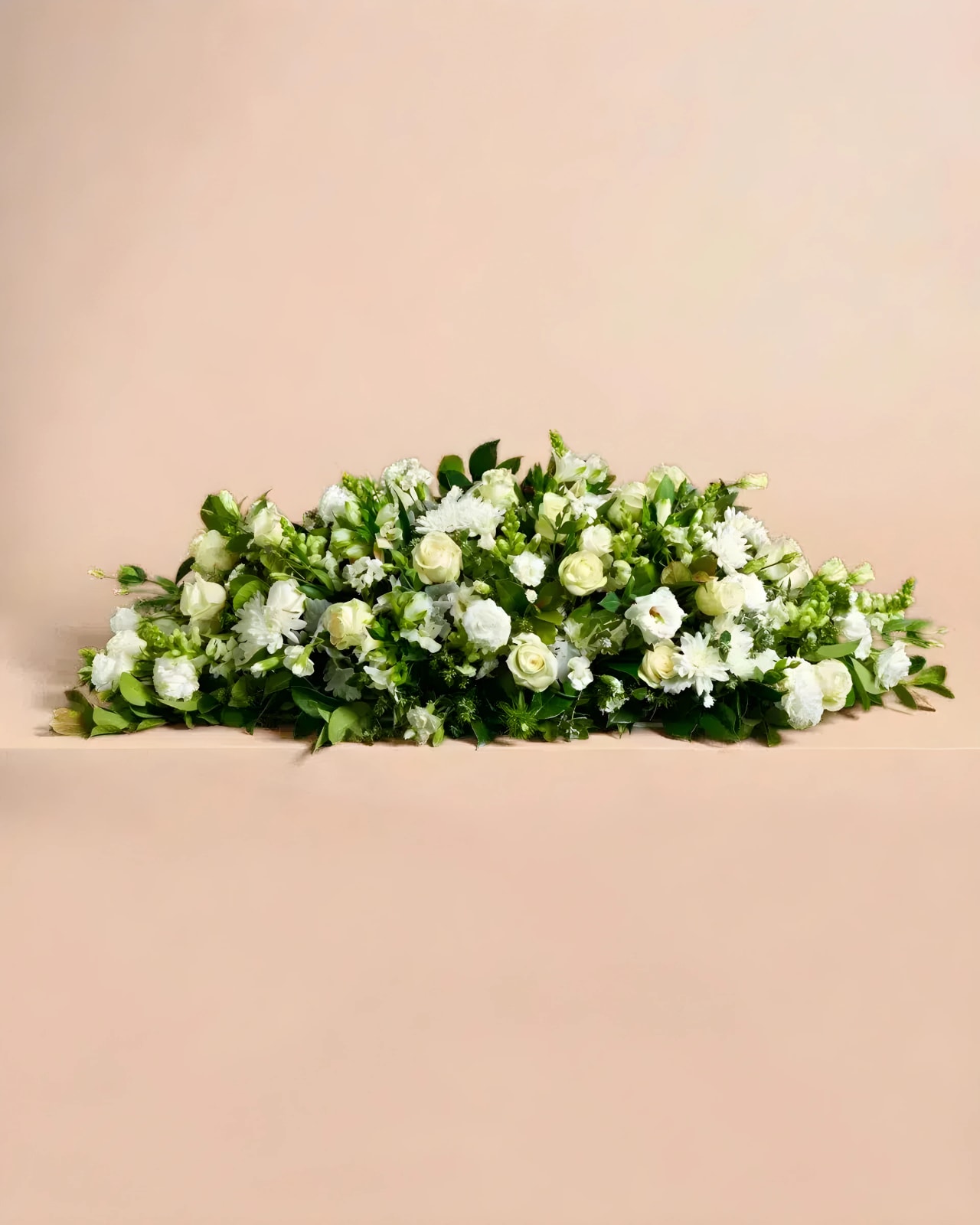
- Close family — casket spray, large wreath, funeral wreath, on the day of the funeral
- Friends, neighbours, loved ones — bouquet, cushion or simple spray, at the funeral or at home
- Colleagues, company — a joint arrangement in the group's name, at the funeral
When a circle of friends or a work team comes together, a single arrangement signed in the group's name has more presence than a scatter of small bouquets. It also makes the logistics easier for the family.
Which flowers suit the moment and the relationship
Each flower carries a message. White leads the way, a symbol of purity and peace; other soft shades have their place too.
- White lily — purity, solemn tribute; a universal tribute
- White rose — respect and remembrance; for loved ones and friends
- Chrysanthemum — reflection and memory; for the grave, at All Saints'
- Orchid — elegance and lasting attachment; a sober, refined tribute
- White carnation, gladiolus, iris — affection and loyalty; for classic arrangements
The chrysanthemum calls for a word of caution: across much of mainland Europe (France, Switzerland, Italy and beyond) it is the flower of graves and of All Saints', closely tied to mourning. In Britain and the United States, by contrast, the same flower is a cheerful everyday bloom with no funeral meaning at all. So before sending chrysanthemums, think about where they are going.
Good to know
Steer clear of very bright colours such as vivid red, orange or bright yellow, which feel more like celebration than quiet remembrance. Be wary too of strongly scented flowers, which quickly become overpowering in a closed room. White, cream, mauve and soft blue stay the safe choice.
Which flowers for a man, which for a woman
Thankfully, the distinction has grown softer. By tradition, a man is given sober, structured arrangements with clean lines and deep tones; a woman, more floral bouquets in pastel shades. Yet nothing beats a personal memory: if the person loved a particular flower or colour, give that one. A fitting tribute always wins over a stereotype.
Our sympathy arrangements
View all bouquets
Classic White Funeral CushionClassic White Funeral Cushion
From 155.00 CHF

Classic Multicolor Funeral CushionClassic Multicolor Funeral Cushion
From 155.00 CHF

Classic Yellow Funeral CushionClassic Yellow Funeral Cushion
From 155.00 CHF

Classic Pink Funeral CushionClassic Pink Funeral Cushion
From 155.00 CHF

Classic Pink and Purple Funeral CushionClassic Pink and Purple Funeral Cushion
From 155.00 CHF

Classic Pink Funeral SprayClassic Pink Funeral Spray
From 255.00 CHF

Classic White Funeral SprayClassic White Funeral Spray
From 255.00 CHF

Classic Multicolor Funeral SprayClassic Multicolor Funeral Spray
From 255.00 CHF
Traditions, ordering and message
Practices vary a great deal from one faith to another. A broad guide helps, as long as you always check with the family:
- Catholic — widely present: crosses, wreaths, casket sprays
- Protestant — welcome, in a sober spirit, white or pastel tones
- Orthodox — valued, sometimes placed in the casket
- Jewish — generally absent, another gesture is preferred
- Muslim — most often discouraged, direct support is better
- Secular or civil — free, following the tastes of the person
When in doubt, a quiet call to a relative or to the funeral directors clears up any uncertainty. For a cremation, scale the arrangement to a service that is often more intimate.
How to send funeral flowers the right way
The gesture takes a little preparation. A florist who specialises in funeral work will guide you on form and symbolism, in store or online. Ordering online has caught on for its simplicity: Kanel and most florists deliver straight to the funeral home, the crematorium or the family's address. As for budget, count on roughly 40 to 80 CHF for a single bouquet, more for a wreath or a large joint arrangement.
Tip
Order at least 48 hours before the service so the delivery arrives on time. For last-minute cases, many florists offer express delivery, best confirmed by phone.
What to write on the ribbon or the card
The words matter as much as the flowers. Keep them short, sincere and simple.
- For someone close — "In loving memory of our dear Paul, with all our tenderness"
- For a friend — "Thinking of you and your family"
- In a professional setting — "With sincere condolences from all the team"
Avoid overly familiar turns of phrase, humour or religious wording if you do not know the family's beliefs.
No flowers, no wreaths, and the alternatives
More and more death notices carry the line "no flowers or wreaths". This wish is respected without question, even when it puzzles. Often the family points to another gesture: a donation to a charity close to the person's heart then replaces flowers and carries their commitment forward. A candle or a discreet houseplant is sometimes still welcome. When in doubt, hold back.
You can always show your presence another way: a handwritten letter, a phone call, a meal delivered to the family through the hardest days. Support does not rest on flowers alone.
Alternatives to flowers for a grieving family
- A potted plant (orchid, ficus) — lasting, it stays beyond the mourning; for close family
- A donation to a charity — it gives meaning and carries a cause forward; when the family asks for it
- Meals or practical help — it eases the first days; for very close family
- A memory album or book of condolence — it gathers the shared memory; for friends and the wider circle
What to remember
Four moments suit the gesture: from the first news, during the wake, on the day of the funeral and in the weeks that follow. The white lily, the white rose and the chrysanthemum stay the three safe choices. And one rule comes before all the others: always check with the family first.
Frequently asked questions
No. It is neither a legal duty nor an absolute social rule. If the death notice says "no flowers or wreaths", a donation or a personal gesture fits just as well.
You may also like
Join us on Instagram
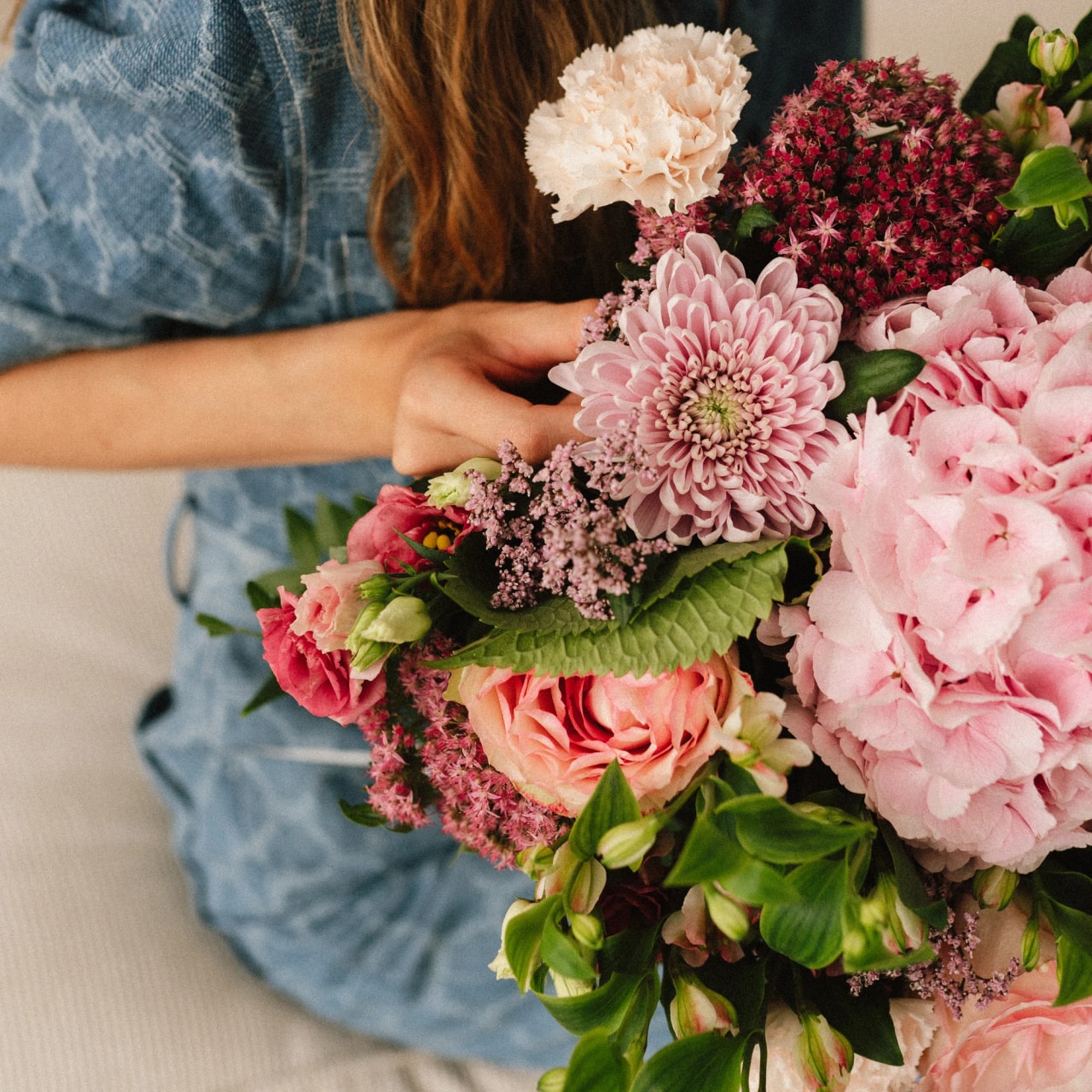
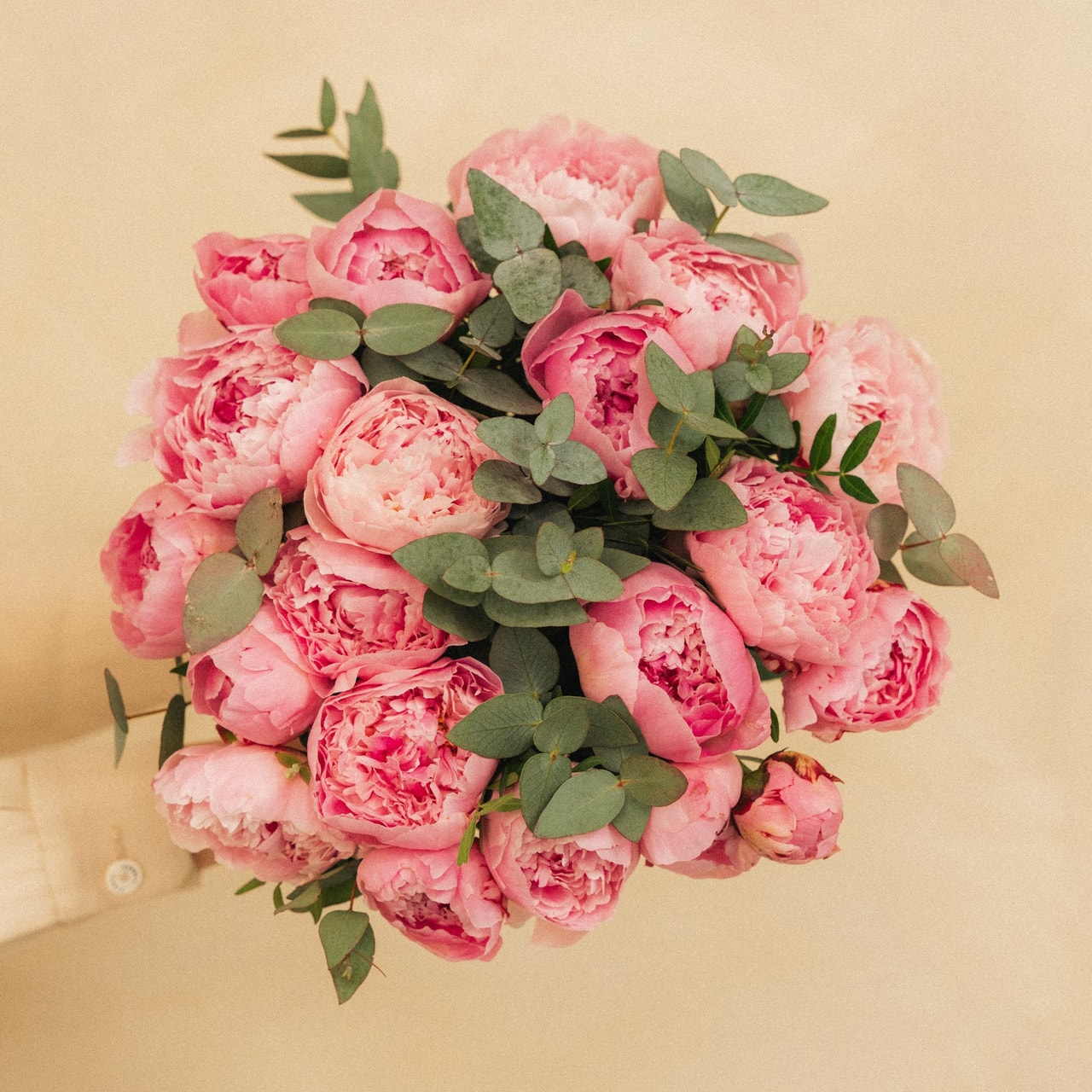

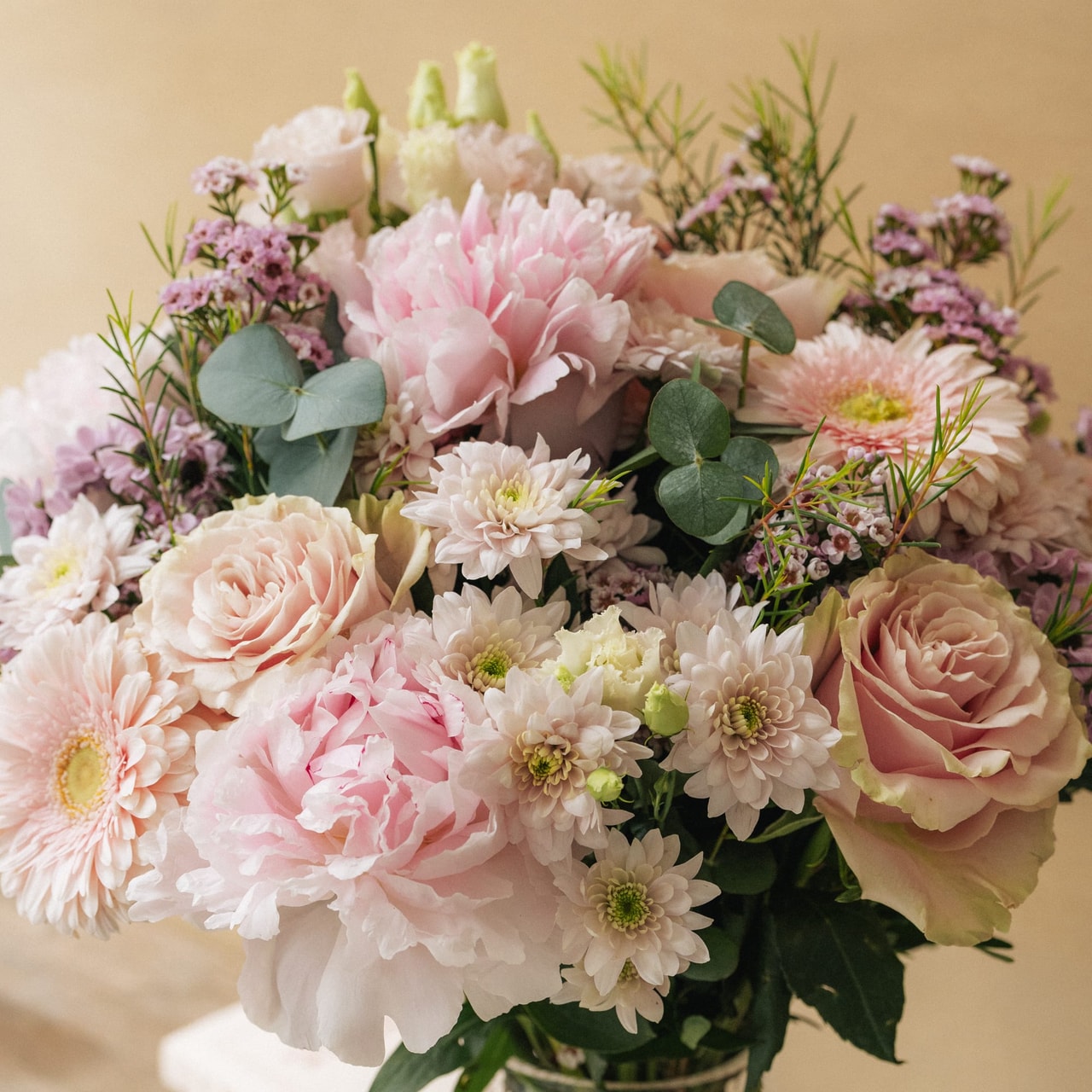

CHOOSE YOUR BOUQUET
Seasonal flowers, roses or timeless bouquets.

ARRANGED BY HAND
Each bouquet is prepared by our florists.

PROTECTED IN TRANSIT
A cardboard box and a water reservoir around the stems.

DELIVERED ON YOUR CHOSEN DATE
Check the dates available for your address.